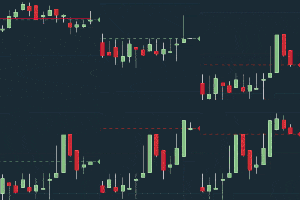
ICT Algorithmic Trading: Combining Market Structure Analysis with BrightFunded Challenges
The development of algorithmic trading has created new possibilities for traders who want to combine technical analysis with automated execution. In proprietary trading environments, however, automation must also account for strict risk parameters and trading policies. The ICT AI Signal MT5 EA on BrightFunded is designed for traders interested in applying ICT-based analysis through a MetaTrader 5 Expert Advisor.
 The Importance of a Systematic Trading Framework
A consistent trading framework consists of more than entry signals.
It should define how market conditions are evaluated, how positions are sized, where protective orders are placed, and how account exposure is monitored.
Without these elements, even a technically sound strategy may become difficult to execute consistently.
Automated systems can help standardize these operations through predefined trading parameters.
 Analyzing Market Structure Through ICT
ICT methodology places considerable emphasis on the relationship between liquidity and price delivery.
Several technical components are particularly relevant:
1. Break of Structure (BOS)
Used to identify potential continuation after price moves beyond a significant structural level.
2. Change of Character (CHoCH)
Used to highlight a possible change in the prevailing market direction.
3. Fair Value Gap (FVG)
An imbalance formation that traders monitor when evaluating potential retracement areas.
4. Order Blocks
Price zones examined for potential buying or selling reactions.
5. Liquidity Pools
Areas around significant highs and lows where stop orders may accumulate.
6. Premium and Discount Zones
A framework for evaluating whether price is relatively high or low within a defined range.
 The Function of an MT5 Expert Advisor
An Expert Advisor converts programmed conditions into automated trading operations.
A typical system may perform several tasks:
- Monitor selected financial instruments.
- Evaluate market structure.
- Identify qualifying trading conditions.
- Generate potential entry signals.
- Calculate position sizes.
- Execute orders.
- Manage open trades.
This workflow allows traders to apply a systematic strategy without manually performing every execution step.
 Drawdown Control and Account Protection
Risk management is particularly important when operating within a proprietary trading evaluation.
A comprehensive configuration should consider daily loss thresholds, maximum overall drawdown, individual position risk, and cumulative exposure.
BrightFunded has published a 5% daily loss limit and a 10% maximum overall loss limit under its relevant account conditions.
Traders should check the official rules for their chosen evaluation model because account conditions and restrictions may change.
 Understanding Prop Firm Compatibility
Technical compatibility and policy compliance are two different things.
An EA may function correctly on MT5 while still requiring adjustments to meet a proprietary firm's trading conditions.
BrightFunded has published a minimum 60-second holding period for EA trades. Traders should also examine restrictions involving latency arbitrage, unsupported grid strategies, news trading, and other prohibited techniques.
Checking these requirements before deployment is essential.
 Automated Versus Discretionary Trading
Discretionary trading allows individuals to interpret market developments and adjust their decisions manually.
Algorithmic trading follows predefined rules and can execute qualifying trades automatically.
The former offers flexibility, while the latter provides consistency in applying programmed conditions.
The most appropriate choice depends on the trader's experience, objectives, and ability to manage risk.
 Practical Recommendations Before Activation
Before using an automated strategy:
1. Understand the underlying trading methodology.
2. Review all available EA settings.
3. Verify the firm's latest trading restrictions.
4. Select conservative risk parameters.
5. Test execution behavior.
6. Monitor open positions and account exposure.
7. Evaluate performance over an appropriate sample of trades.
 Conclusion: Building a More Disciplined Trading Process
ICT-based algorithmic trading brings together market structure analysis, liquidity concepts, and automated execution.
For MT5 users exploring BrightFunded, this approach provides an additional way to organize trading operations and apply predefined risk parameters.
Nevertheless, no trading robot can remove market uncertainty or ensure that an evaluation will be passed. Sound configuration, continuous supervision, and responsible risk management remain fundamental to long-term trading development.